TikTok Growth · 2027 Guide
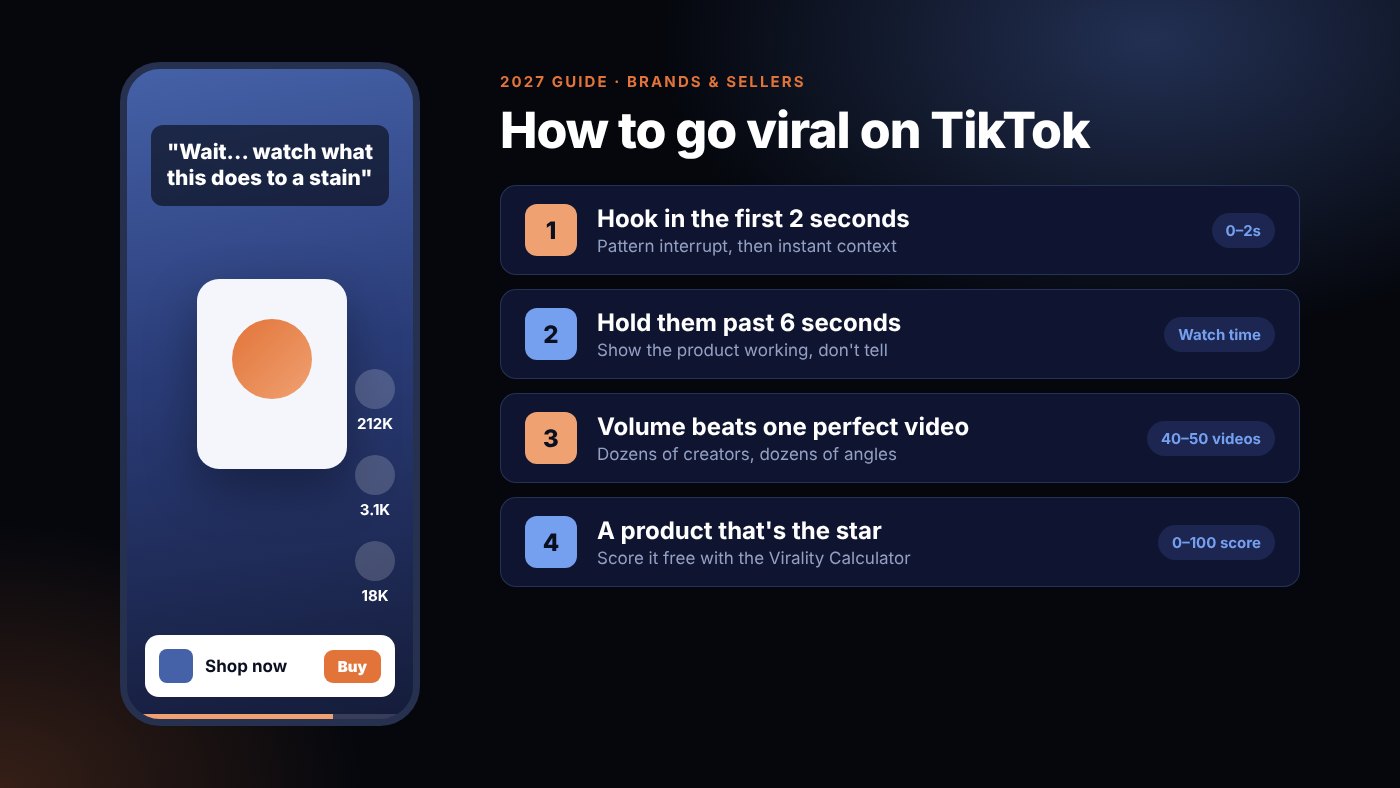
To go viral on TikTok, you need a hook that stops the scroll in the first two seconds, a video that keeps people watching past six seconds, and enough volume that the algorithm has many chances to find a winner. For brands, there is a fourth rule most guides skip: the product has to be the star. If the product can't show something happening on camera, no hook will save it. You can check that in about 20 seconds with our free TikTok Virality Calculator.
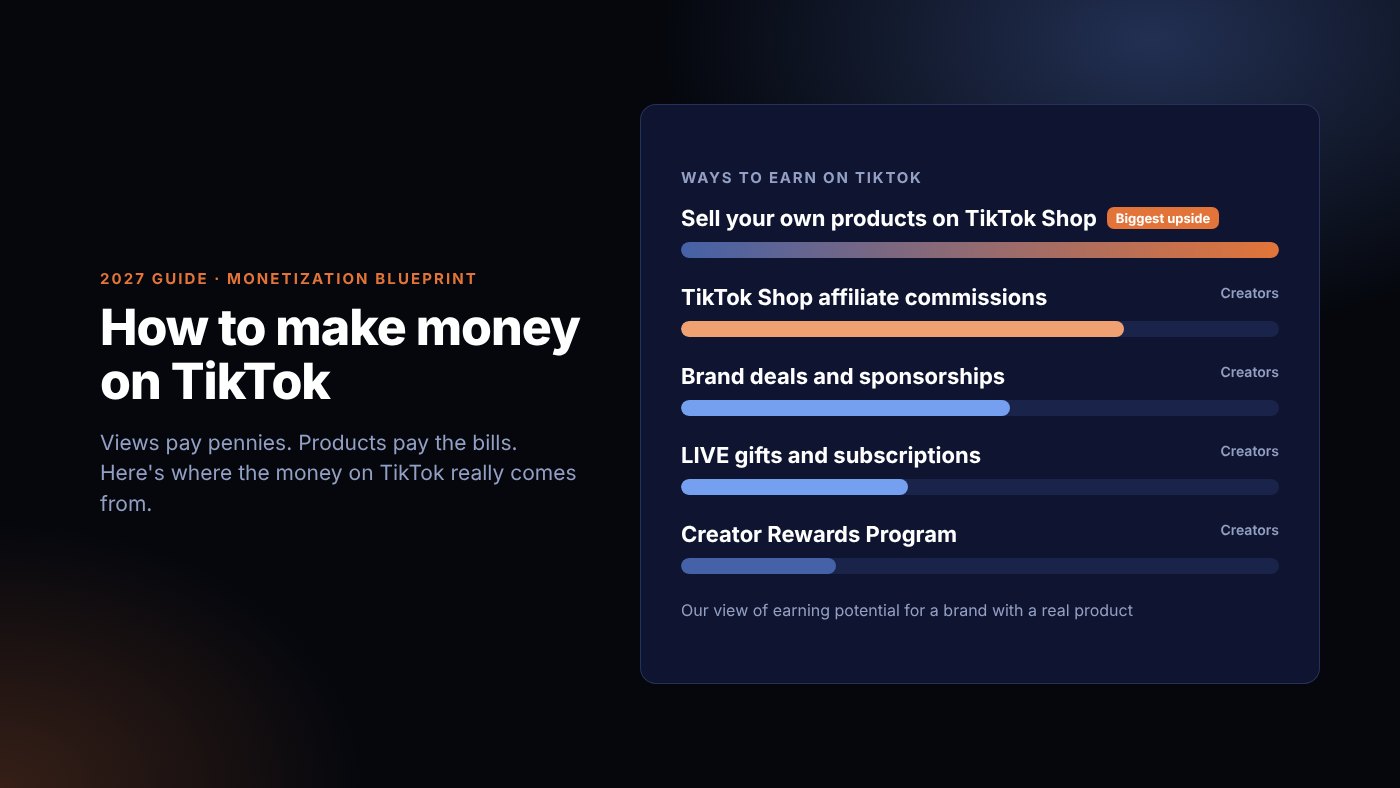
I'm Ian Page, founder and CEO of Bullseye Sellers. My team has launched more than 200 TikTok Shops since March 2024, and we have watched thousands of creator videos either take off or die in the first second. This guide is written for brand owners and sellers who want views that turn into sales, not just views. If you are a creator looking to monetize, our guide to making money on TikTok is the better place to start.
0–2sTo stop the scroll with a pattern interrupt
6sThe first watch time mark we brief creators to beat
40–50Mediocre videos that out-earn one perfect one
200+TikTok Shops our team has launched since March 2024
How does the TikTok algorithm decide what goes viral?
TikTok's For You feed recommends each video based on how people interact with it, not on how many followers the account has. In its own explanation of how TikTok recommends videos, the company says recommendations are driven by user interactions (videos people like, share, comment on and watch to the end), video information (captions, sounds and hashtags) and device and account settings. It also says follower count and past high-performing videos are not direct factors.
In practice, every new video gets a small test audience. If that group watches, rewatches, comments and shares, TikTok shows it to a bigger group, and then a bigger one. That is what going viral really is: a video that keeps passing each test. The signals we watch most closely are:
- Hold rate in the first seconds. If viewers swipe away before the video says anything, nothing else matters.
- Watch time and completion. TikTok treats finishing a longer video as a strong sign of interest.
- Shares and saves. A share puts the video in front of someone new, which is exactly what the algorithm is trying to predict.
- Comments. Questions like "where do I get this?" are the best kind for a product video.
The good news for brands: because follower count isn't a direct factor, a new shop with zero followers can have a video reach millions of people. The bad news: you can't buy your way past a weak first two seconds.
What makes a TikTok hook stop the scroll?
A hook stops the scroll when it breaks the pattern of the feed and tells the viewer, instantly, why this video is for them. The hooks that work best for products are visual first and verbal second. These are the patterns I see win over and over:
- The result first. Open on the after: the clean carpet, the clear skin, the kid laughing. Explain how you got there later.
- The callout. "If your dog does this every night..." names the viewer and their problem in one line.
- The "wait, what?" moment. Something that looks impossible, funny, a little gross or a little taboo. Scroll-stopping content usually has one of those feelings.
- The "why didn't I think of this?" product. A simple fix for an everyday annoyance makes people stop and watch to see if it really works.
The brief we give creators
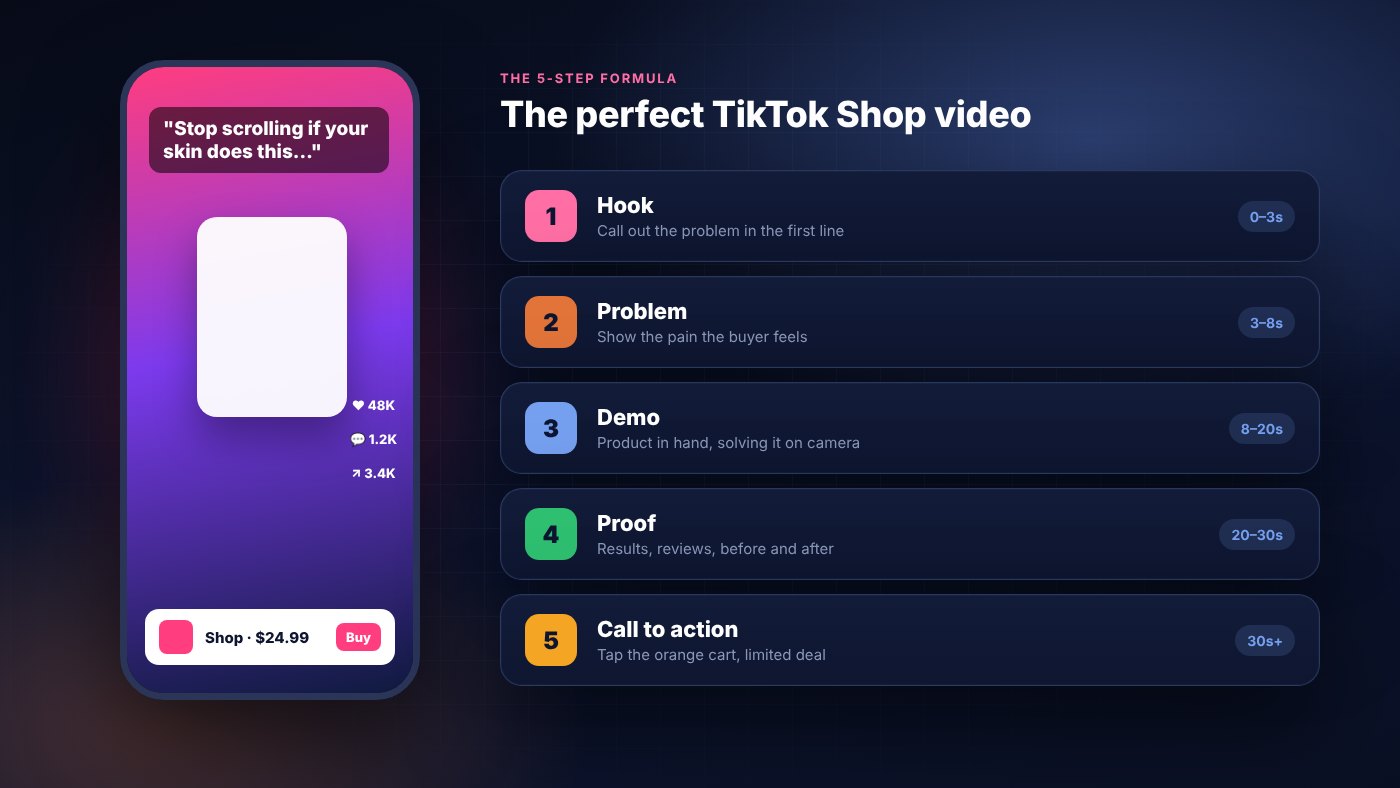
0 to 2 seconds: a pattern interrupt. 2 to 5 seconds: instant context, so the viewer knows what they are looking at. 5 to 25 seconds: show, don't tell, one benefit demonstrated on camera. Then social proof, and a close in the last 3 to 5 seconds with a simple offer. The first goal is to get viewers past 2 seconds, then to 6.
For the full shot-by-shot structure of a selling video, read the 5-step formula for the perfect TikTok Shop video. This guide focuses on the bigger picture: why some products go viral again and again while others never do.
How do you keep people watching on TikTok?
You keep people watching by showing the product doing something, not by talking about it. Watch time collapses the moment a video turns into a sales pitch. It holds when the viewer is waiting to see a result.
- Demonstrate one benefit. One clear before and after beats a list of five features. If the product has five benefits, that is five different videos.
- Delay the payoff a little. Show the problem, start the fix, and let the viewer stay to see the result.
- Use real people in real rooms. Phone-shot content from an ordinary kitchen or bathroom feels native. Polished ads feel like ads, and people swipe.
- Add social proof. Other people using it, comments asking where to buy it, "this sold out last week." Proof keeps viewers watching to the close.
- Close fast. A clean offer in the last few seconds: a bundle, a limited-time deal, a TikTok-only two-pack.
How often should you post on TikTok to go viral?
For brands, the honest answer is that your own account posting more isn't what makes you go viral. Volume across many creators is. On the TikTok Shops we run, 90% to 99% of revenue comes from affiliate creators, not the brand's own page. Lumineux came in around 97% and Stickerbox around 99%.
That changes how you should think about frequency. Every creator video is another lottery ticket for the algorithm, with a different face, a different hook and a different audience. Forty to fifty mediocre videos will out-earn one perfect one, because you can't predict which angle will catch. We tell brands: quantity for discovery, quality for scaling.
| Approach | What happens | Result for brands |
| Brand account posts daily | One voice, one audience, slow learning | Rarely the engine of sales |
| A few big influencers | Expensive, all eggs in a few baskets | Hit or miss |
| Dozens of affiliate creators | Many hooks, faces and audiences tested at once | Finds winners fast, then ads scale them |
Expect some waste. About 20% of creators who get a free sample never post. That is normal, which is why sampling has to happen in the hundreds, not the dozens. Our guide to building a loyal group of L3 to L5 creators explains how to keep the good ones posting.
Do you need a viral video to sell on TikTok Shop?
No. Most brands that win on TikTok Shop don't win because of one lucky video. They win because of a system that keeps producing good-enough videos and then puts ad money behind the ones that work. TikTok Shop is a scaling platform, not a launching platform.
Our rule of thumb: once a product has 50 or more affiliate videos live, turn on GMV Max at around $100 to $200 a day and accept a return of about 1.0 at first. The ads find which videos convert and push them to colder audiences, which is how a "viral" moment gets manufactured on purpose. Read our GMV Max best practices for how we run it, or see our TikTok ads management service.
Stickerbox shows what that looks like. When we started in July, the shop made about $5,000 a month. Ninety days later it had done $367,480 in GMV, almost all of it driven by affiliate creators. Read the Stickerbox case study for the full story.
Why do some products go viral on TikTok and others never do?
Because the product decides more than the video. I use what I call the infomercial test: could your product have been on a late night infomercial or a home shopping channel? If you can picture someone demonstrating it in 30 seconds and a viewer saying "oh," you have a TikTok product. In those videos, the product is the star, not the creator and not the brand.
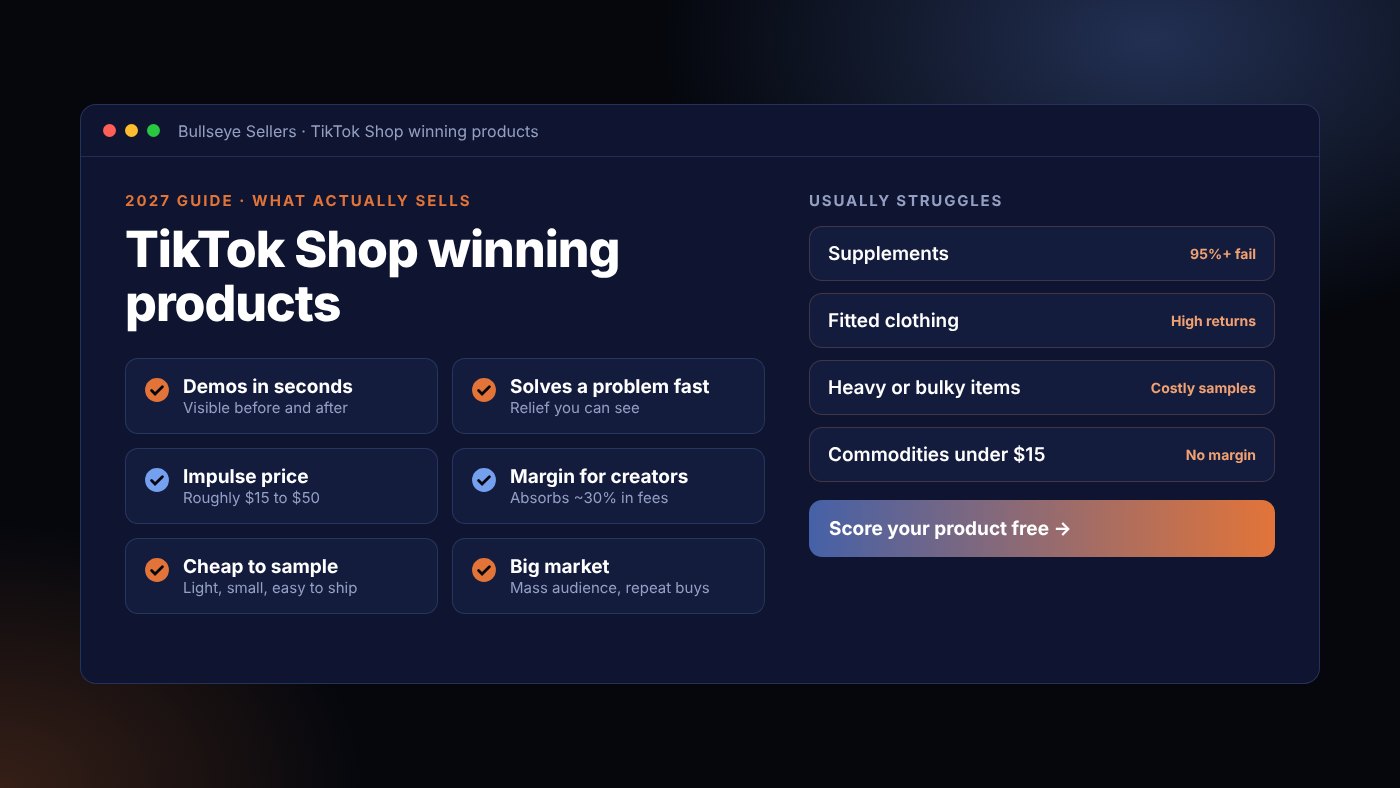
Products that pass usually share a few traits: they are easy for any creator to demo on a phone, they solve a problem people feel every day, they sit at an impulse price, and there is a big audience that wants them. A slower result still counts when creators can film a clear before and after or a 7-day progress diary, as with skincare or teeth whitening. Products that fail usually have nothing visible happening on camera, even over time. In our experience, supplements fail on TikTok Shop more than 95% of the time for exactly that reason: a bottle is just a bottle.
We break down the traits of products that sell, with real examples, in TikTok Shop winning products: what actually sells.
Free tool · No sign-up
Check if your product can go viral before you spend a dollar
The TikTok Virality Calculator scores any product from 0 to 100 on its potential to scale on TikTok Shop. Paste a TikTok Shop, Amazon or Shopify link and in about 20 seconds you get:
- A virality potential score and band, from Exceptional Viral Potential down to "stay away from TikTok Shop."
- A rating on eight factors that decide whether creators can sell it, including demonstrability, solving a problem fast, market size, price and margin.
- Three video hooks creators can test, a check of your unique selling point against competitors, and a TikTok Shop policy check.
- The one fix that would help most, plus a free 90-day roadmap by email if you want it.
What should you do after a TikTok video goes viral?
Move fast, because a viral video is a window, not a business. When a video starts to take off on its own, we put ad spend behind it within hours, and no later than 72 hours. Then:
- Make sure you have stock. A viral video with no inventory is lost money, and TikTok penalizes shops that cancel or ship late.
- Re-brief your creators. Send the winning hook and angle to every creator in your program so they can make their own version.
- Watch Amazon. In a survey of 1,000 shoppers I shared at Sellers Summit, 61% of people who saw a product on TikTok bought it on Amazon. Our halo effect post shows how to measure it.
- Keep shop health clean. Ship within 48 hours and answer customers within 24 hours, or the extra traffic turns into violations.
TikTok virality checklist for brands
- The product passes the infomercial test and scores 60 or higher on the Virality Calculator.
- Every video opens with a pattern interrupt and context inside 5 seconds.
- Each video demonstrates one benefit, on camera, with a visible result.
- Samples go out in the hundreds a month to creators who actually post.
- Once 50+ affiliate videos are live, GMV Max runs at $100 to $200 a day.
- Winners get ad spend within 72 hours, and stock is ready.
If you want a team to run this system for you, that is what our TikTok Shop management and TikTok affiliate management services do. Not sure you're ready? Read is your brand ready for TikTok Shop first.
Results and official sources
- Bullseye Sellers has served 165+ brands across TikTok Shop, Amazon and Shopify.
- Stickerbox went from about $5K a month to $367,480 in TikTok Shop GMV in 90 days, with 99.6% of revenue from affiliate creators (case study).
- Official references: TikTok Shop Academy (official seller guides), TikTok Ads Business Help Center, TikTok Community Guidelines.
Frequently asked questions
How do you go viral on TikTok fast?
Stop the scroll in the first two seconds, show one visible result on camera, and post enough videos that the algorithm has many chances to find a winner. For brands, that means many affiliate creators posting, not one account posting more often.
Does follower count matter for going viral on TikTok?
Not directly. TikTok says follower count and past high-performing videos are not direct factors in its recommendations. A new account can reach millions of people if viewers watch, share and comment.
What is the best length for a viral TikTok video?
There is no magic length. What matters is that people keep watching. For product videos, we brief creators to hook in 2 seconds, give context by 5, demonstrate one benefit through about 25 seconds and close in the last 3 to 5.
Can any product go viral on TikTok?
Not every product. Products that go viral are easy to demonstrate, solve a visible problem and appeal to a big audience. You can check your product in about 20 seconds with the free TikTok Virality Calculator from Bullseye Sellers.
Do you need ads to go viral on TikTok Shop?
Not to get a first viral video, but most brands that keep growing use ads. Our rule is to turn on GMV Max at about $100 to $200 a day once a product has 50 or more affiliate videos live, and to push organic winners with ad spend within 72 hours.