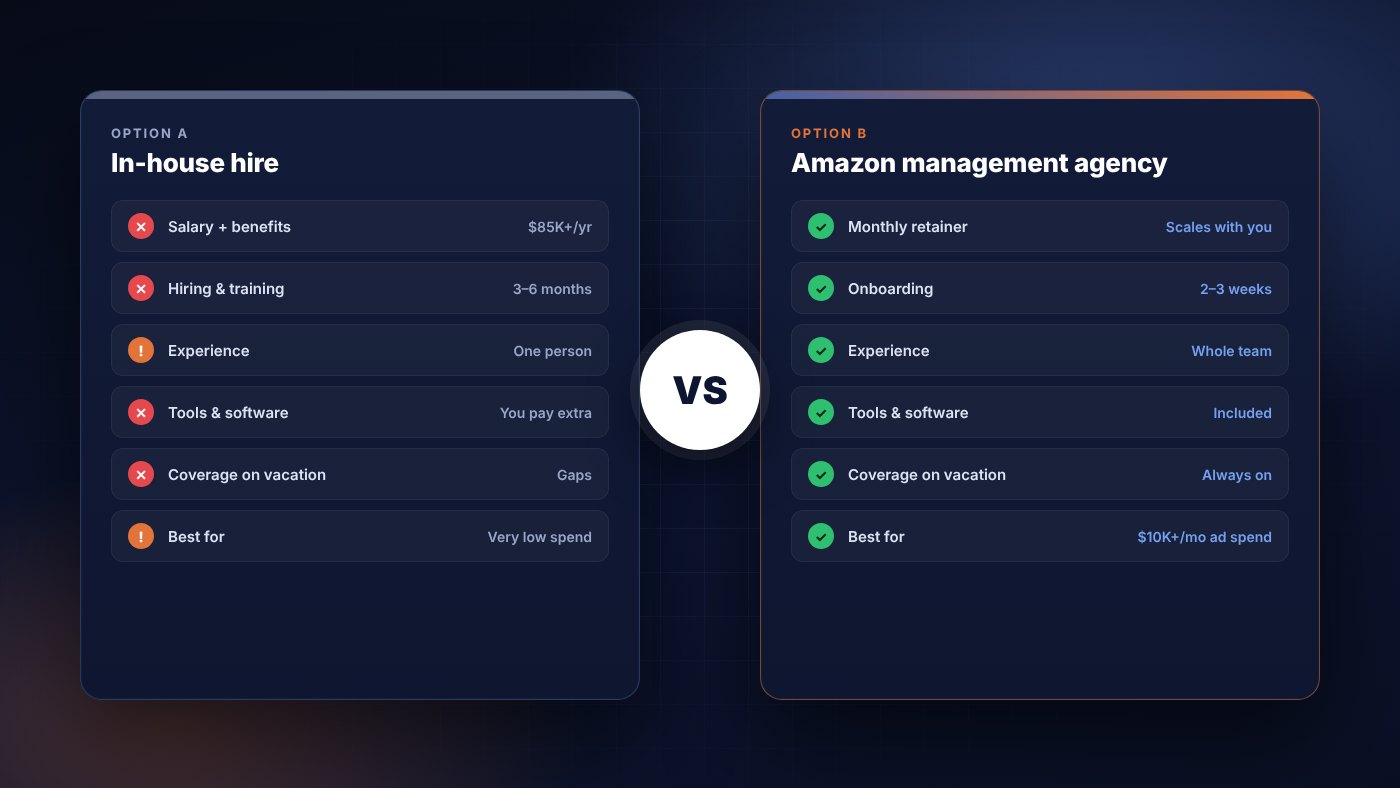
Hire in-house when you have a simple catalog, low ad spend and time to train someone. Hire an Amazon account management agency when you need a full team of listing, PPC, inventory and account-health specialists for less than the cost of several salaries. Many growing brands use a hybrid of both.
Key takeaways
- One in-house hire rarely covers listings, PPC, inventory and account health well.
- Agencies bring cross-brand data and no ramp-up time.
- In-house works best for early-stage brands with simple catalogs.
- A hybrid model pairs an internal brand owner with an agency team.
Most brand owners wait too long to make this decision. By the time they realize their current setup isn’t working, they’ve already left six figures on the table — in missed revenue, wasted ad spend, and suppressed listings nobody caught in time.
This isn’t a knock on in-house teams. It’s a pattern we’ve seen across 165+ brands and $40M+ in revenue managed. The brands that scale fastest are the ones that get honest about what kind of Amazon management actually fits their stage.
What Does an In-House Amazon Manager Really Cost?
When brands think “in-house vs. agency,” they usually compare salary to agency retainer. That math is almost always wrong.
Here’s what a single in-house Amazon manager actually costs:
- Base salary: $55,000–$90,000/year
- Benefits (health, 401k, PTO): add 20–30% on top
- Payroll taxes: another 7–10%
- Tools (Helium 10, Jungle Scout, etc.): $500–$1,500/month
- Recruiting and onboarding if they leave: $10,000–$20,000
You’re realistically looking at $85,000–$130,000+ per year for one person expected to be an expert in PPC, listing copywriting, SEO, FBA logistics, and account health. Simultaneously. That’s not a job description — that’s five jobs.
And when that person quits — or burns out — you’re back to zero. We’ve seen brands lose rank on their top ASINs during a two-week hiring gap. It takes months to recover what was lost in two weeks. That single point of failure is one of the most underappreciated risks in Amazon management.
What Does an Agency Give You That an Employee Can’t?
Team Depth You Can’t Hire Into a Single Salary
When you work with an agency, you’re getting a PPC specialist, a listing copywriter, an account health manager, and an FBA strategist — all in one retainer. At Bullseye Sellers, if your TACoS spikes, the ad specialist is on it. If your listing gets suppressed, someone catches it before it tanks your rank. No single employee can give you that coverage.
Cross-Brand Intelligence
An agency that has served 165+ brands across categories has pattern recognition no in-house hire can replicate. We know which keyword strategies are working right now, what Amazon’s algorithm rewarded last quarter, and what it’s punishing this quarter. That cross-brand data is an unfair advantage. You can’t buy it. You can only access it by working with someone who has it.
No Knowledge Gaps, No Ramp-Up Time
Amazon in 2026 looks nothing like Amazon in 2022. PPC bidding strategies, backend keyword rules, review policies, FBA fee structures — all changed significantly. An agency that lives and breathes Amazon every day stays current. Your new hire may not.
What Bullseye Sellers Manages for Brand Partners
- Listing optimization — copy, images, A+ content, backend keywords
- PPC management — Sponsored Products, Sponsored Brands, Sponsored Display
- TACoS reduction — driving down ad cost as a percentage of total revenue
- FBA management — inventory planning, restock alerts, shipment troubleshooting
- Review monitoring — tracking sentiment, flagging violations
- Account health — policy compliance, appeal support, suppression monitoring
When Does an In-House Amazon Manager Make Sense?
In-house makes sense when you’re doing $10M+ on Amazon as a single-brand business and need someone embedded in operations, you have hundreds of SKUs requiring deep proprietary knowledge, or you can afford to build a full team — not just one person, but a PPC manager, copywriter, and account health specialist at minimum.
If that’s you, build it right. But most brands reading this don’t fit that profile.
When Does an Amazon Agency Make More Sense?
For brands doing $500K to $5M on Amazon, an agency is the more strategic and cost-effective choice. An agency is the right move when:
- You’re managing Amazon yourself or with one person who’s stretched thin
- Your PPC is running on autopilot and TACoS is creeping up
- You’re launching new products and need fast execution
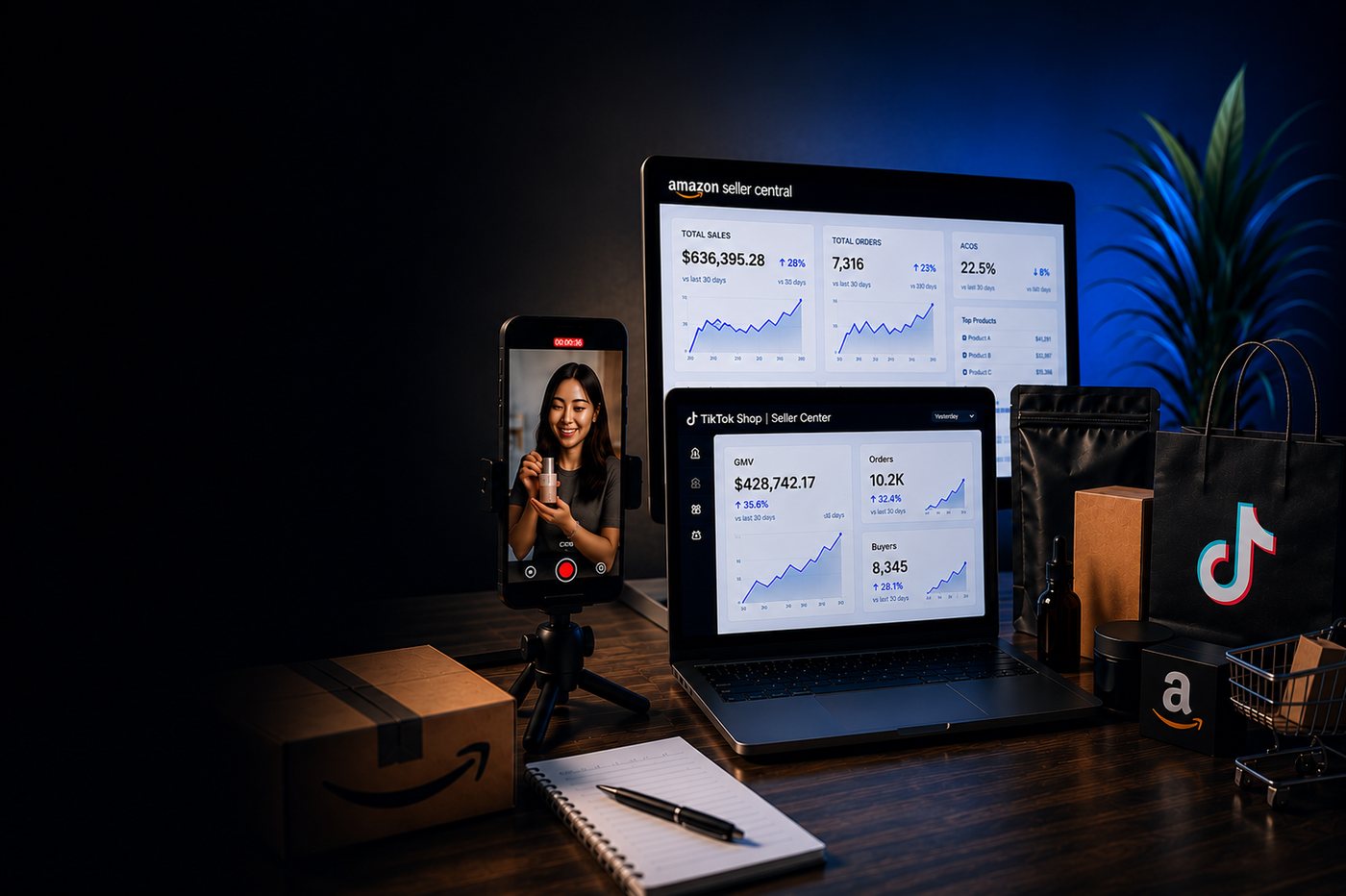
- You’re diversifying onto TikTok Shop and can’t split focus
- Your listings haven’t been professionally optimized in the last 12 months
- You’ve had account health issues and you’re nervous about another violation
The best time to bring in a team is before the wheels come off, not after.
The Hybrid Model
One in-house operator handles high-level strategy and brand relationships while the agency handles execution — PPC, listing updates, FBA coordination, account health monitoring. This works well when you want an internal point of contact without building a full department. The key is a clear division of responsibilities.
Results and official sources
- Bullseye Sellers has served 165+ brands across TikTok Shop, Amazon and Shopify.
- One Amazon client went from 45% to 12% TACoS in six months, with revenue 34% higher by month six (case study).
- Dr. Price's Vitamins had almost 10K units of unfulfillable Amazon inventory restored, and the listing live again, within 24 hours.
- Official references: Amazon: Learn how to sell on Amazon, Amazon: selling fees and pricing, Amazon: Fulfillment by Amazon (FBA).
Quick answers
| Question | Short answer |
| Is it cheaper to hire an Amazon agency or an in-house manager? | An experienced in-house manager costs a full salary plus benefits and tools, and still covers only one skill set. |
| When does in-house Amazon management make sense? | When your catalog is small, ad spend is modest and you have someone with time and experience to manage the account daily. |
| What is the hybrid model? | An internal team member owns brand decisions and communication while an agency runs day-to-day execution like PPC, listings and account health. |
| What does an Amazon account management agency do? | It handles listing optimization, PPC, inventory, account health, reviews, promotions and reporting. |
| How do I choose an Amazon agency? | Ask for specific deliverables, sample reports, case studies in your category and who will actually work on your account. |
Frequently asked questions
Is it cheaper to hire an Amazon agency or an in-house manager?
An experienced in-house manager costs a full salary plus benefits and tools, and still covers only one skill set. An agency retainer is often lower than the cost of the several hires needed to match its team. See our Amazon account management cost guide.
When does in-house Amazon management make sense?
When your catalog is small, ad spend is modest and you have someone with time and experience to manage the account daily.
What is the hybrid model?
An internal team member owns brand decisions and communication while an agency runs day-to-day execution like PPC, listings and account health.
What does an Amazon account management agency do?
It handles listing optimization, PPC, inventory, account health, reviews, promotions and reporting. Our breakdown of what an Amazon account manager does covers each function.
How do I choose an Amazon agency?
Ask for specific deliverables, sample reports, case studies in your category and who will actually work on your account. Learn about our Amazon account management.
Related guides
- What Does an Amazon Account Manager Do?
- Amazon Account Management Cost
- Amazon Account Management
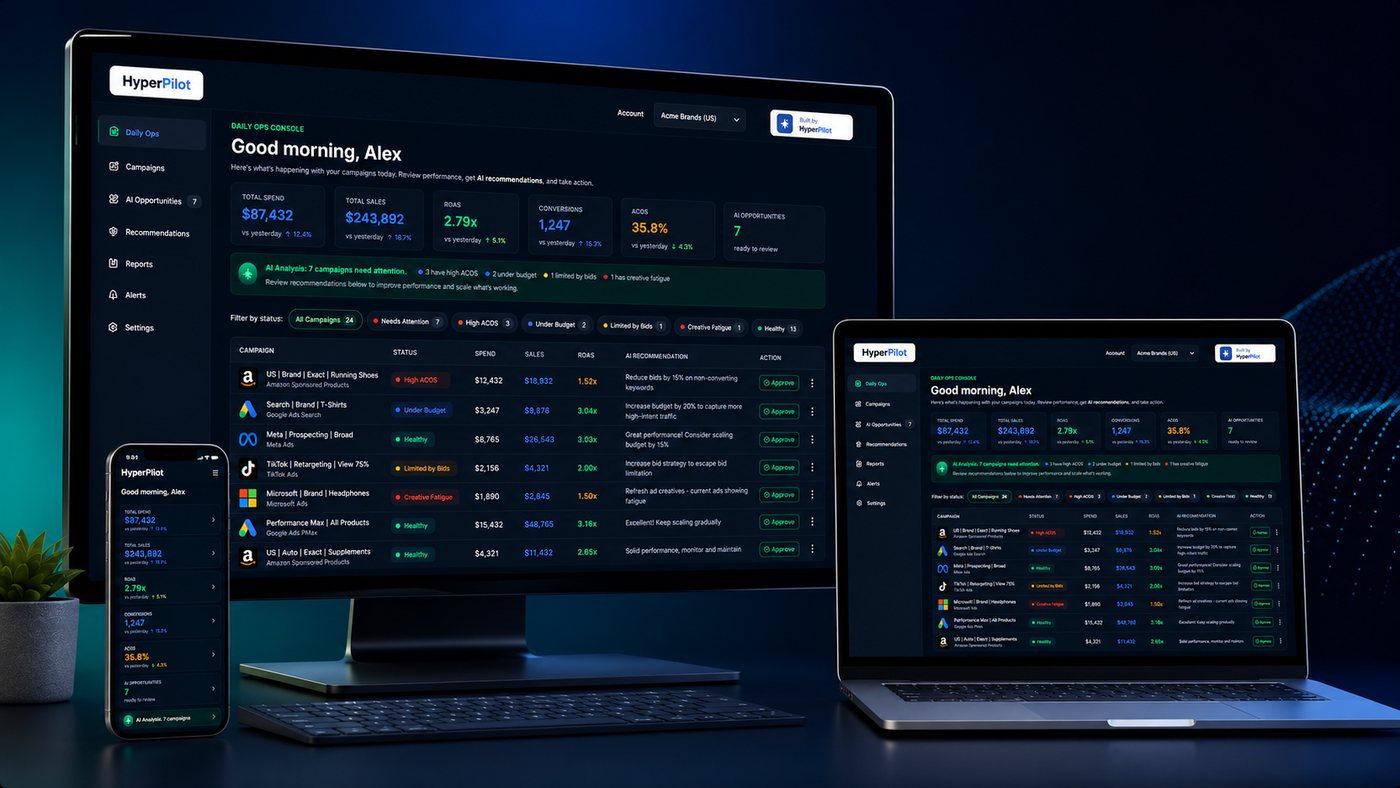
- HyperPilot AI Amazon Management
- Case Study: 45% to 12% TACoS
- Amazon PPC Management
Which Is Right for You?
If you’re managing Amazon yourself or with one person, you’re already understaffed for what the platform demands in 2026. The brands winning right now have specialists, not generalists. Systems, not guesswork.
We’ve helped 165+ brands drive over $40M in revenue. No cookie-cutter strategies. No junior managers learning on your dime.
Book a free strategy call with Bullseye Sellers → We’ll look at your account, tell you where the real opportunities are, and give you an honest assessment. Most brands leave that first call with at least one thing they can act on immediately.